
3 Tips for Choosing a Good Speaker for Listening to J-POP
[Advertisement] This post is part of the Coupang Partners program, and I receive a commission for it.
If you want to listen to J-POP through speakers, the first thing you should do is decide “where you’ll be listening.” The right product for you will depend on whether you’ll be listening at low volume at your desk, playing music throughout your room, or using it on the go.
Rather than a review of a specific product based on personal experience, this article is a buying guide that summarizes criteria to consider when choosing equipment for listening to J-POP. If you’re still confused about the different styles of Japanese music, I recommend reading 7 Tips for Getting Started with J-POP first; it’s also a good idea to choose equipment based on the type of music you listen to most often.
Hanip Summary
| Direction of Selection | Recommended Environment | Points to Check |
|---|---|---|
| Products for PCs/Desktops | Next to the desk, laptop, and monitor | Vocal clarity, volume, connection method, and whether the bass is too heavy |
| Bluetooth Products | Living Room, Kitchen, Camping, On the Go | Battery life, portability, connection reliability, app EQ support |
| Active Bookshelf Type | When you want to enjoy music more fully at home | Room size, placement distance, input terminals, volume control method |
Key Criteria for Choosing Speakers for Listening to J-POP
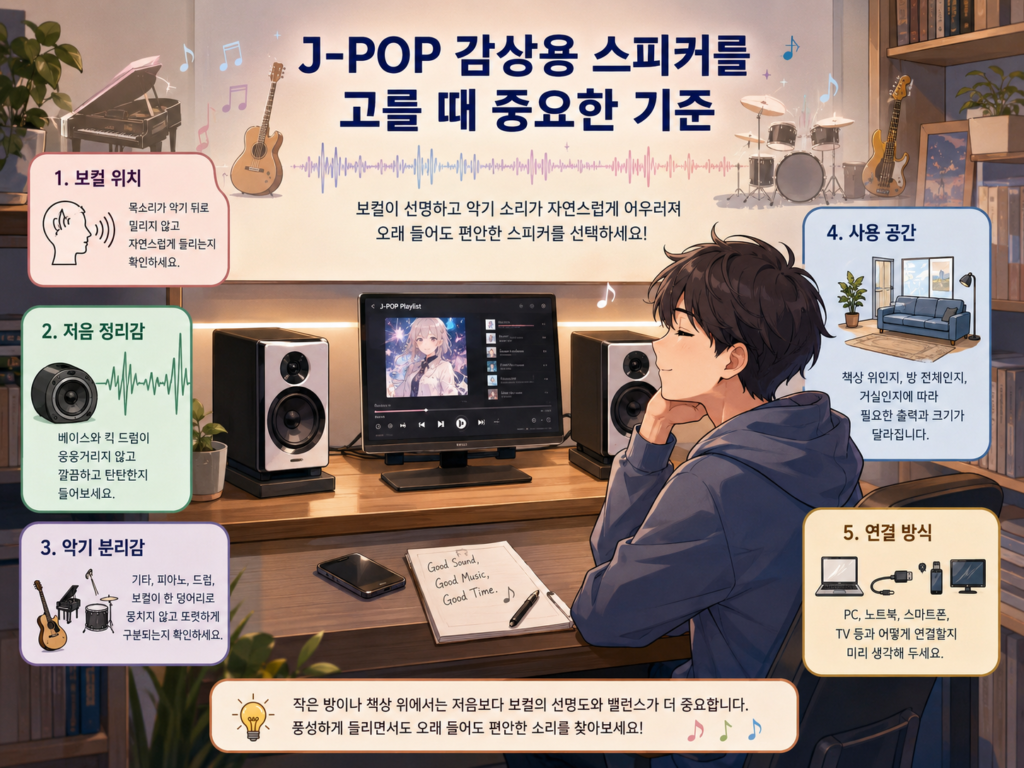
In J-POP, the vocals are often at the center of the song, with guitar, piano, synths, drums, bass, and backing vocals densely layered in the background. Therefore, for beginners, headphones that offer a natural balance between vocals and instruments are a safer choice than those that emphasize only the low frequencies or have overly pronounced high frequencies.
Especially in small rooms or on a desk, the low frequencies can build up more easily than you might think. Even if it sounds rich at first, listening for a long time can cause the vocals to get pushed into the background, and the band’s sound can become muddled and sound stifling.
Criteria to Check First
- Vocal Position: Make sure your voice isn't drowned out by the instruments.
- Bass Clarity: I check to see if the bass and kick drum have a rumbling sound that doesn't linger.
- Instrument Separation: Make sure the guitar, piano, drums, and vocals don't all blend into a single mass.
- Usage: The required power and size will vary depending on whether it's for a desk, an entire room, or the living room.
- Connection Method: PC, 노트북, 스마트폰, TV와 어떻게 연결할지 미리 생각해야 합니다.
The Difference Between Earbuds, Headphones, and Speakers
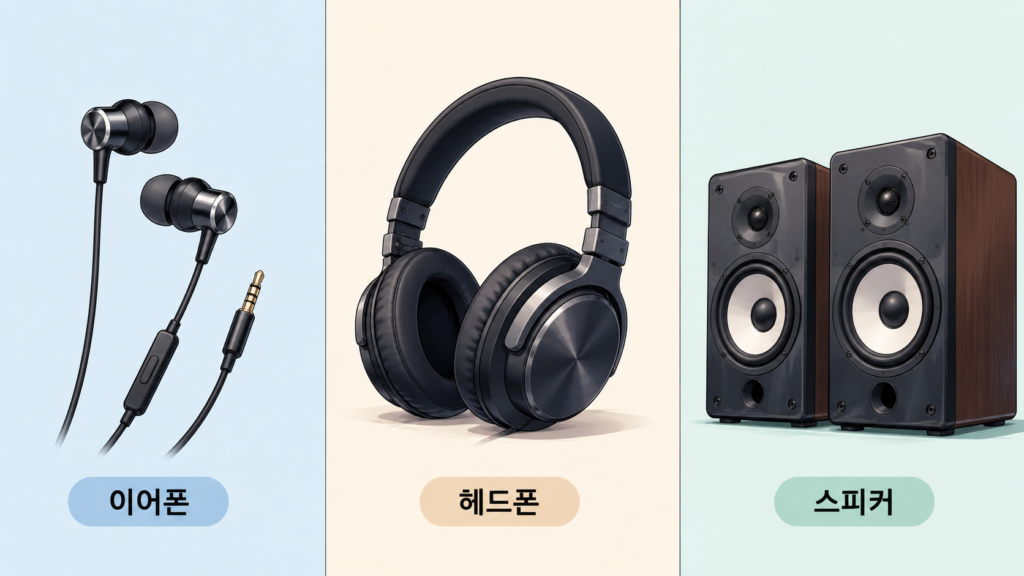
With earbuds, sound often reaches the inner part of the ear, so vocals tend to sound clearer. Headphones, on the other hand, create space around the ears, which can make the arrangement of instruments and the sense of space feel a bit more open.
Speakers are the best way to play music naturally, as the sound spreads throughout the room. However, the sound can vary significantly depending on the room’s layout, the position of your desk, the distance from the walls, and the volume.
- Earphones: It's portable and great for listening to vocals up close.
- Headphones: They offer great spatial awareness and immersion, but you need to consider their comfort and weight.
- Speaker: It's less tiring on the ears and you can hear it naturally inside the room, but placement is important.
If you're trying to decide whether earbuds or headphones are right for you, you might want to check out the article 2 Tips for Choosing Headphones That Sound Great for J-POP, Plus 2 Recommendations for comparison.
Features of Speakers That Reproduce Vocals Clearly
In J-POP, the vocals play a central role in conveying the song’s emotional tone and melody. If the voice sounds too distant, the impact of the chorus is diminished; conversely, if high notes are overemphasized, the vocals may sound clear at first but become tiring to listen to over time.
Points to Check When Focusing on Vocals
- Are the midrange tones natural?: Your voice should not sound thin or distant.
- Are the high notes too sharp?: Check to make sure the cymbals, synths, and sibilants aren't grating on the ears.
- Does the bass drown out the vocals?: I check to see if the vocal focus remains clear even with a lot of bass.
- Can you hear it even at low volumes?: Products that require the volume to be turned up significantly can be uncomfortable to use at night.
Just because you're looking for a product that highlights the vocals doesn't mean you have to choose one that makes the vocals stand out too much. When listening to J-POP, it's often more enjoyable to have a balance where the vocals are clear, but the guitar and piano provide natural backing.
Why Band Sound and Instrument Separation Are Important
If you often listen to Japanese band music or anime theme songs, the clarity of the individual instruments is also important. In songs where the guitar, drums, bass, piano, and backing vocals all play at once, if the sounds blend together, the whole track can sound muddy.
Good separation is different from sound simply spreading out widely. It’s more like the vocals are centered, and the guitar, piano, drums, and bass are all audible without overlapping.
- Guitar: Check to see if the riff is audible without the vocals.
- Drums: I check to see if the kick and snare keep the rhythm clear.
- Bass: It's more important whether the lines are distinct than the quantity.
- Chorus: Let's listen to see if it blends well with the vocals in the chorus.
Why Bass That's Too Strong Feels Stifling
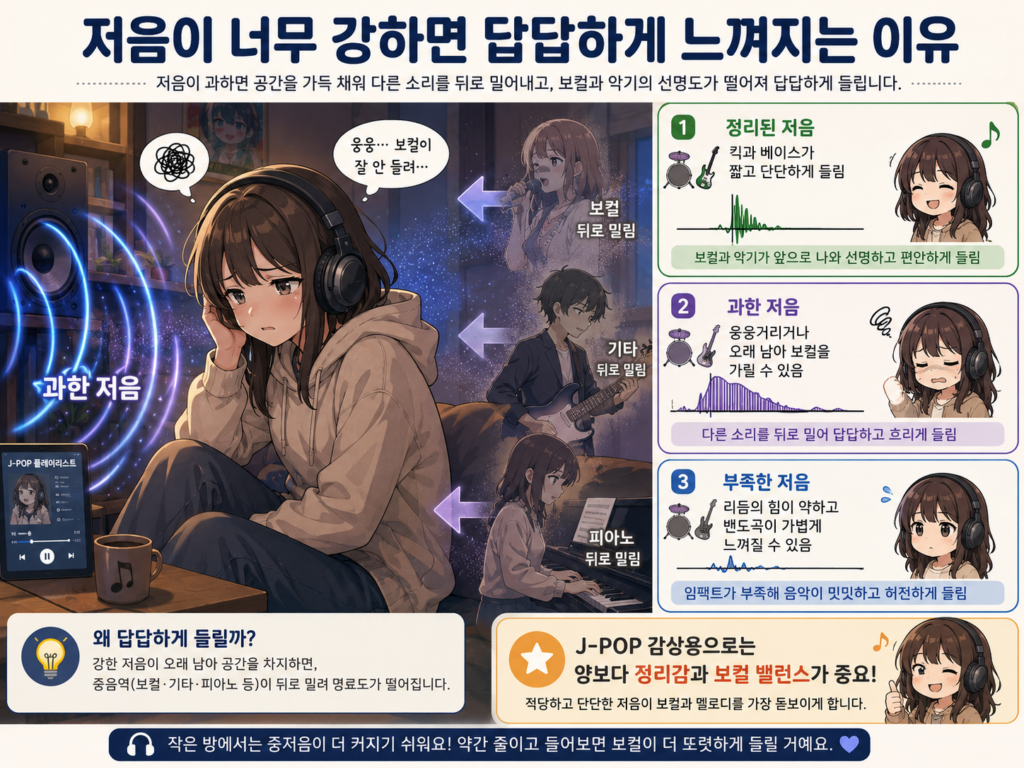
Tracks with a lot of bass may sound powerful and rich at first listen. However, in J-POP, if there’s too much bass, the vocals, guitar, and piano can get pushed into the background, making the song sound muffled.
In particular, mid-to-low frequencies may sound louder on a desk or in a small room. Since the product itself produces strong bass, and this is compounded by reflections off the walls and desk, the bass and kick drum may be heard before the vocals.
- Clean bass: The kick and bass sound short and tight.
- Excessive bass: It may cause a buzzing sound or linger long enough to drown out the vocals.
- Lack of bass: The rhythm may lack impact, and the band's songs may come across as light.
It's not that the bass is bad. It's just that when listening to J-POP, it's better to focus on clarity and vocal balance rather than sheer volume.
You have to view them differently depending on whether they're for a desk or for enjoying the entire room.
When choosing speakers for desk listening, it is important to check whether vocals remain clear even at a low volume and from a short distance. Since many people place speakers on both sides of a monitor and listen from about 50 cm to 1 m away, a product that is too large can actually be difficult to position properly.
On the other hand, if you want to play music throughout the entire room, you should also look at output power, bass extension, left-right placement, and the distance from the wall. Small PC speakers may be enough for a small room, but in a larger space, the sound can feel thin.
Things to Check by Space
- On a desk: Compact size, near-field listening, easy volume control
- Small room: Whether the bass is too strong, distance from the wall, room resonance
- Entire room: Left-right placement, enough output power, clear mids
- Living room: TV connection, Bluetooth support, remote control or app control
The Difference Between Bluetooth Speakers and PC Speakers
Bluetooth speakers are easy to connect to a smartphone and convenient to move around inside a room. If they are rechargeable, they can be used in many situations, such as in the kitchen, beside the bed, or while camping.
PC speakers are useful when you want a stable setup in front of a desk. They often support various connection methods, such as USB, 3.5 mm, AUX, and optical input, making them easy to use with a laptop or desktop computer.
- Advantages of Bluetooth speakers: Portability, wireless connection, easy use
- Things to keep in mind with Bluetooth speakers: Battery life, latency, and connection stability need to be checked
- Advantages of PC speakers: Fixed desk setup, stable connection, easy volume control
- Things to keep in mind with PC speakers: They are less portable, and cable management may be necessary
The Difference Between Active and Passive Speakers
The Difference Between Active and Passive Speakers
If you are a beginner, it is best to understand active speakers first. Active speakers have a built-in amplifier, so you can use them right away by connecting power and an audio source.
- Active speakers: They are relatively easy to use because you can connect them to a PC, smartphone, DAC, or other source after plugging them into power.
- Passive speakers: They require a separate amplifier, so you need to consider the combination of the amplifier and speakers together.
- Recommended direction for beginners: For a first setup, active bookshelf speakers or PC speakers are easier to approach.
If you want to listen to J-POP more widely at home, it is convenient to start by checking active bookshelf speakers. They are relatively simple to install and can help you enjoy the placement of vocals and instruments inside a room.
The Importance of Speaker Placement and Distance
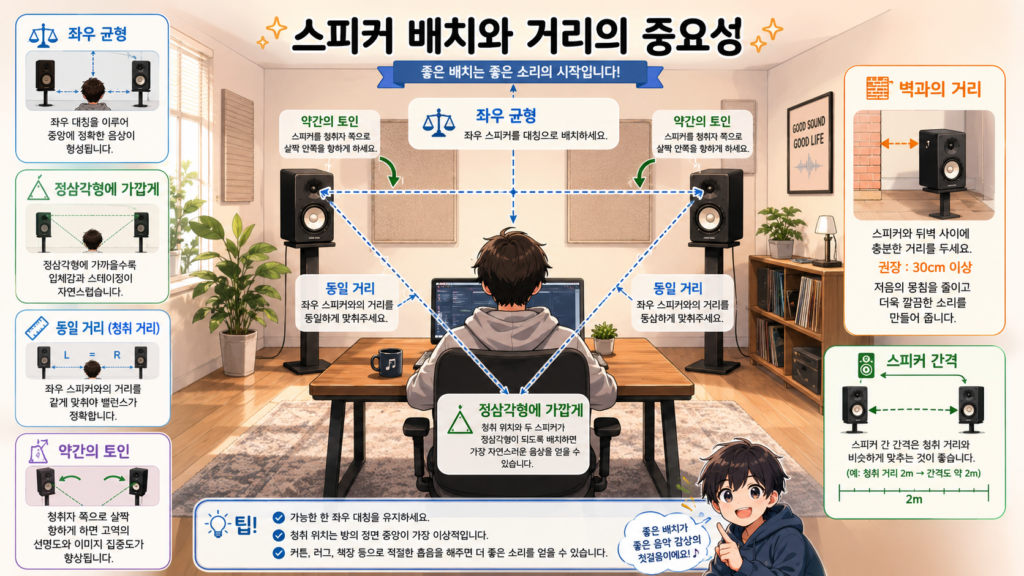
Even the same speakers can sound very different depending on where they are placed. If they are too close to the wall, the bass can become exaggerated. If the left and right speakers are too close together, the sense of space can feel narrow and congested.
Basic placement tips for beginners
- Try placing the left speaker, right speaker, and listening position in a triangle.
- If the speakers are too close to the wall, move them slightly forward.
- If they are placed directly on a desk, resonance may occur, so consider using stands or isolation pads.
- Try to keep the tweeter height close to ear level.
- Make the left and right environments as similar as possible, so one side is not much closer to a wall than the other.
Placement is one of the things that can change the sound without spending money. Even before buying new speakers, simply adjusting the position of your current equipment can make vocals and bass feel different.
Things to Check When Choosing a Small Room
In a small room, it is more realistic to choose speakers that do not have excessive bass and are easy to control at low volume rather than simply looking for high output. If you cannot play music loudly, it is important to check whether vocals and instruments remain clear even at a low volume.
- Size: Check first whether the speakers can fit on your desk or shelf.
- Bass: Products with a large woofer or strong bass can feel overwhelming in a small room.
- Volume control: Check reviews to see whether the left-right balance stays stable at low volume.
- Input options: Check whether they can connect to your PC, laptop, smartphone, or TV.
- Sound leakage: If you live in an apartment or studio, also consider the volume you can use at night.
3 Recommended Approaches
1. PC/Desktop Speakers for Desk Listening
If you plan to use speakers on a desk with a laptop, desktop computer, or monitor, PC speakers are the easiest option to start with. Since you will be listening from a short distance, vocal clarity and easy volume control matter more than high output power.
- Advantages: They are easy to set up and convenient for enjoying music, videos, and games at a desk.
- Things to keep in mind: If the speakers are too small, the bass may feel light.
- Recommended for: People who often listen to J-POP at a desk and mainly connect speakers to a PC or laptop
- Things to check before buying: USB, AUX, Bluetooth support, power method, left-right cable length, and desk space
Desk Speaker Example: Creative Pebble V3
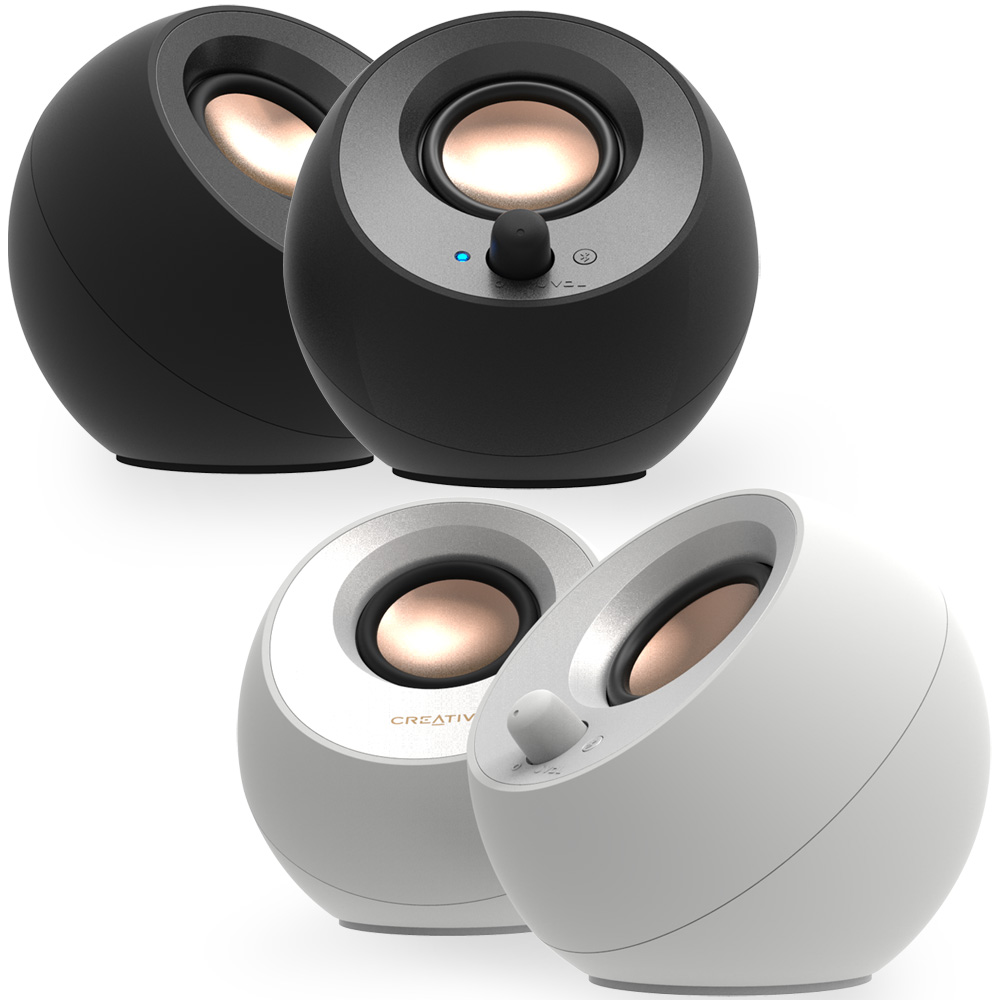
If you want to listen to J-POP casually at a desk, you can compare compact PC speakers such as the Creative Pebble V3. Rather than filling a large space, this type of speaker is more suitable for placing beside a laptop or monitor and listening comfortably to vocals and accompaniment.
However, compact speakers may have limitations in bass depth and spaciousness. Before buying, it is a good idea to check the connection method, power method, desk space, and volume control style on the product page.
Check Creative Pebble V3 on Coupang
2. Bluetooth Speakers for Portability and Convenience
If you often play music from your smartphone and want to move the speaker around the room or use it outdoors, a Bluetooth speaker is convenient. If it is rechargeable, it is easy to use in different places, such as beside the bed, in the kitchen, near the bathroom, or while camping.
- Advantages: Wireless connection is convenient, portability is good, and the speaker can be used in many spaces.
- Things to keep in mind: You need to check battery life, latency, app support, and water resistance rating separately.
- Recommended for: People who do not listen to music in only one fixed place and want to play music lightly while moving around
- Things to check before buying: Battery life, charging port, Bluetooth version, stereo pairing, and weight
Music Listening Speaker Example: Edifier MR4
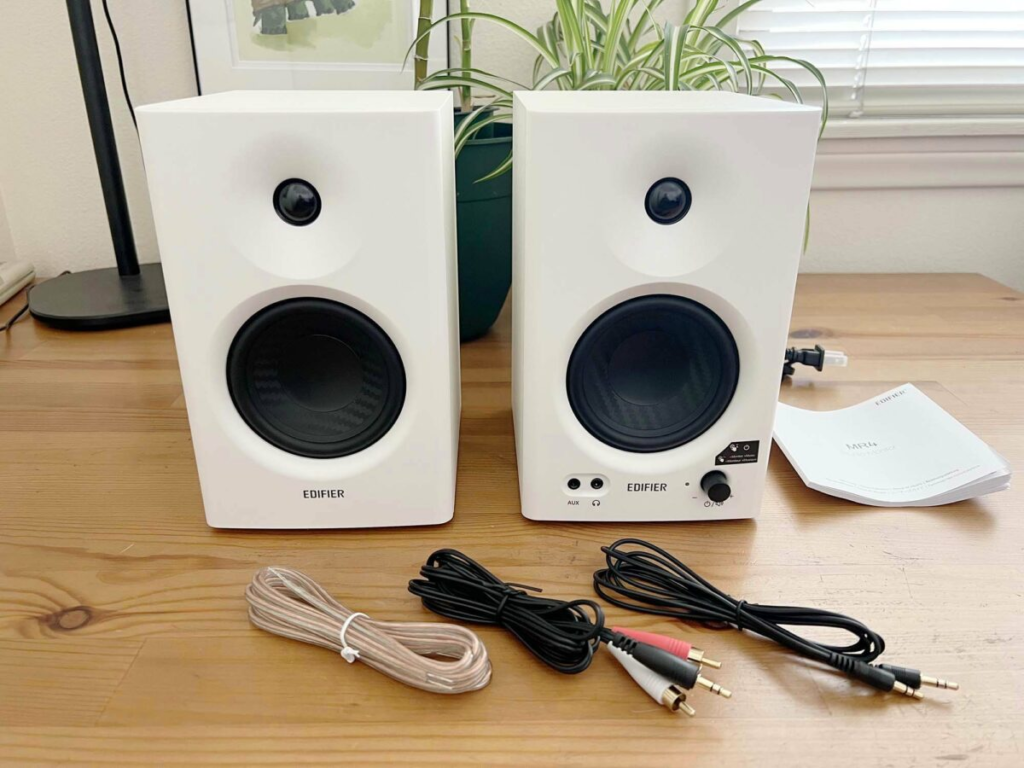
If you want a more balanced sound for J-POP listening, you can compare active speakers such as the Edifier MR4. This type of speaker is a good direction to check whether vocals, guitar, drums, and synths sound clear without becoming too muddy on a desk.
Many J-POP songs have detailed vocals and dense arrangements, so it is better to check vocal placement and instrument outlines rather than choosing a product that only emphasizes bass. Before buying, it is a good idea to check speaker size, input options, placement space, authenticity, and after-sales service conditions on the product page.
3. Active Bookshelf Speakers for a Wider Home Listening Experience
If you want to enjoy vocals and instrument placement more spaciously inside a room, active bookshelf speakers are worth considering. Since the amplifier is built in, beginners can use them relatively easily, and they often create a wider sound than small PC speakers.
- Advantages: They are good for room-wide listening and make it easier to enjoy vocals and instrument placement with more space.
- Things to keep in mind: You need to consider desk space, power, left-right placement, and distance from the wall.
- Recommended for: People who often play music at home and want a more spacious listening experience than earphones can provide
- Things to check before buying: Size, input options, remote control, Bluetooth support, room size, and placement space
Bluetooth Speaker: JBL Flip 7

If portability and convenience are important, you can compare Bluetooth speakers such as the JBL Flip 7. Compared to speakers that stay fixed in front of a desk, this type of speaker is better suited for playing music easily in a room, kitchen, or outdoor space.
Since the JBL Flip 7 is a portable speaker, it is better to focus on ease of use and outdoor practicality rather than precise stereo separation or detailed left-right imaging. Before buying, it is a good idea to check battery life, waterproof and dustproof rating, size, weight, connection method, authenticity, and after-sales service conditions on the product page.
Pre-Purchase Checklist
- Main location: Decide whether you will mainly use the speakers on a desk, in a small room, or in a living room.
- Connection Method: Check whether they can connect to your PC, laptop, smartphone, or TV.
- Power method: Check whether they use a wall outlet, USB power, or a rechargeable battery.
- Size: Make sure they can actually fit on your desk or shelf.
- Volume control: Check whether volume is controlled with a front knob, remote control, or app.
- Authenticity: Check whether the seller is an official brand store, an authorized domestic distributor, or a reliable seller.
- After-sales service: Check the warranty period, initial defect exchange policy, and repair request process.
- Review content: Look for reviews about vocals, bass, white noise, Bluetooth dropouts, and heat.
Choices to Avoid
- Choosing a product with only strong bass for a small room
- Choosing large bookshelf speakers without checking desk space
- Buying without checking the connection ports
- Choosing a seller with unclear authenticity or after-sales service conditions
- Buying a Bluetooth speaker without checking battery life and charging port
- Choosing only by price without checking vocal tuning, size, and placement environment
Speaker Recommendations for People Like This
- Vocal-focused type: Suitable for people who often listen to female vocals, singer-songwriters, and emotional J-POP.
- Balanced type: A safe choice for people who listen to J-POP, K-POP, pop, and band music evenly.
- Controlled-bass type: Good for people who often listen to dance pop or songs with electronic sounds but do not want vocals to get buried.
- Spacious-sound type: Suitable for people who want to enjoy live videos or band music at home with a relaxed sense of space.
- Convenience-focused type: If you want to move the speaker from room to room, a Bluetooth speaker is a realistic choice.
If this is your first purchase, it is safer to choose a product with a fairly balanced sound across vocals, bass, and treble rather than one with an extreme sound signature. Once you know your favorite listening style better, you can narrow your choices toward vocal-focused, band-focused, or spacious-sounding speakers.
Adjustment Guidelines When Using FxSound and EQ Together
A free equalizer or EQ should be seen less as a tool that completely changes the character of your equipment and more as a way to slightly reduce uncomfortable parts of the sound. Instead of making large adjustments from the beginning, it is safer to change one frequency range at a time in small steps and compare the result.
- When vocals sound buried: Check whether 125 Hz to 250 Hz is too strong, and adjust 2 kHz to 4 kHz slightly.
- When the bass feels muddy: Lower the bass boost and slightly reduce the low-mid range.
- When the treble sounds sharp: Lower 8 kHz to 16 kHz slightly and reduce clarity effects.
- When the sense of space feels excessive: Lower surround or spatial effects so that the vocal focus does not become blurred.
If you are using EQ for the first time, it is better to start with the basics in the article 7 Tips for Setting Up FxSound for the First Time , such as the default output device, presets, and master gain. EQ settings can sound different depending on your device and room structure, so treat them as a reference rather than a fixed answer.
6 J-POP Songs That Are Great for Testing Your Speakers
When choosing new speakers or adjusting EQ, it is best to compare the sound using songs you already know well. In this article, however, to avoid overlapping too much with previous song recommendations, I have selected mostly songs released after 2020 that are useful for checking vocals, band sound, spaciousness, and bass control.
| Purpose of the Test | Song | Key Points to Listen For |
|---|---|---|
| Vocal-Focused | yama – Haru wo Tsugeru (春を告げる) | Check whether the vocal sounds natural over the electronic sounds and rhythm without becoming too thin or detached. |
| Vocal-Focused | natori – Overdose | Listen to whether the low, smooth vocal texture gets buried by the bass. |
| Band Sounds | macaroni enpitsu – Nandemonaiyo, (なんでもないよ、) | Check whether the vocal, guitar, and drums remain separated in the chorus instead of being pressed together into one mass of sound. |
| Band Sounds | Saucy Dog – Cinderella Boy (シンデレラボーイ) | Listen to whether the vocal gets pushed backward when the guitar and voice come in together. |
| Soundstage / Bass Control | Chilli Beans. – lemonade | Check whether the light band groove and vocal stay clear without becoming muddy or congested. |
| Soundstage / Bass Control | Tatsuya Kitani – Where Our Blue Is (青のすみか) | Listen to whether the bass, guitar, and vocal spread out too much during the fast-moving parts of the song. |
When testing speakers, it is better to repeat short sections rather than listening to the entire song from start to finish. Focus on the chorus, parts where many instruments overlap, and sections where the vocal comes forward. Comparing at both low volume and your usual listening volume will give you a more realistic sense of how the speakers will feel in daily use.
Frequently Asked Questions
Are Bluetooth Speakers Good for Listening to J-POP?
Yes. If portability and convenience are important to you, Bluetooth speakers can be a good choice. However, before buying, it is a good idea to check battery life, connection stability, app EQ support, and bass tuning on the product page.
What Should I Look for When Choosing Speakers for a Desk?
Rather than focusing on high output power, it is better to check whether vocals are clear at a close distance, whether volume control is convenient, and whether the speakers can actually fit on your desk. You should also check connection options such as USB and AUX.
Are Speakers with Strong Bass Good for a Small Room?
Not always. In a small room, bass can easily become exaggerated, making vocals and instruments sound muddy. For J-POP listening, it is better to look at bass control and vocal balance together rather than focusing only on the amount of bass.
Can Beginners Use Active Bookshelf Speakers?
Yes. Active speakers have a built-in amplifier, so they are relatively easy to approach. However, you should check the size, power requirements, input ports, and left-right placement space in advance.
Does Speaker Placement Really Matter?
Yes. Even the same speakers can sound different depending on their distance from the wall, left-right spacing, and height relative to your ears. After buying speakers, it can be helpful to adjust their position little by little before changing the EQ.
What Should I Check First When Buying on Coupang?
It is best to check the seller, product authenticity, after-sales service policy, delivery method, and exchange or return conditions first. Price, stock, delivery, and after-sales service availability can change, so make sure to confirm the details on the product page before buying.